BEAUTY & REST
What Does “Beauty Sleep” Actually Mean?
The phrase sounds charming, but its staying power may come from something simple: rest is part of the environment in which beauty routines, skin function and everyday well-being unfold.
DANGEL EDITORIAL • 6 MIN READ
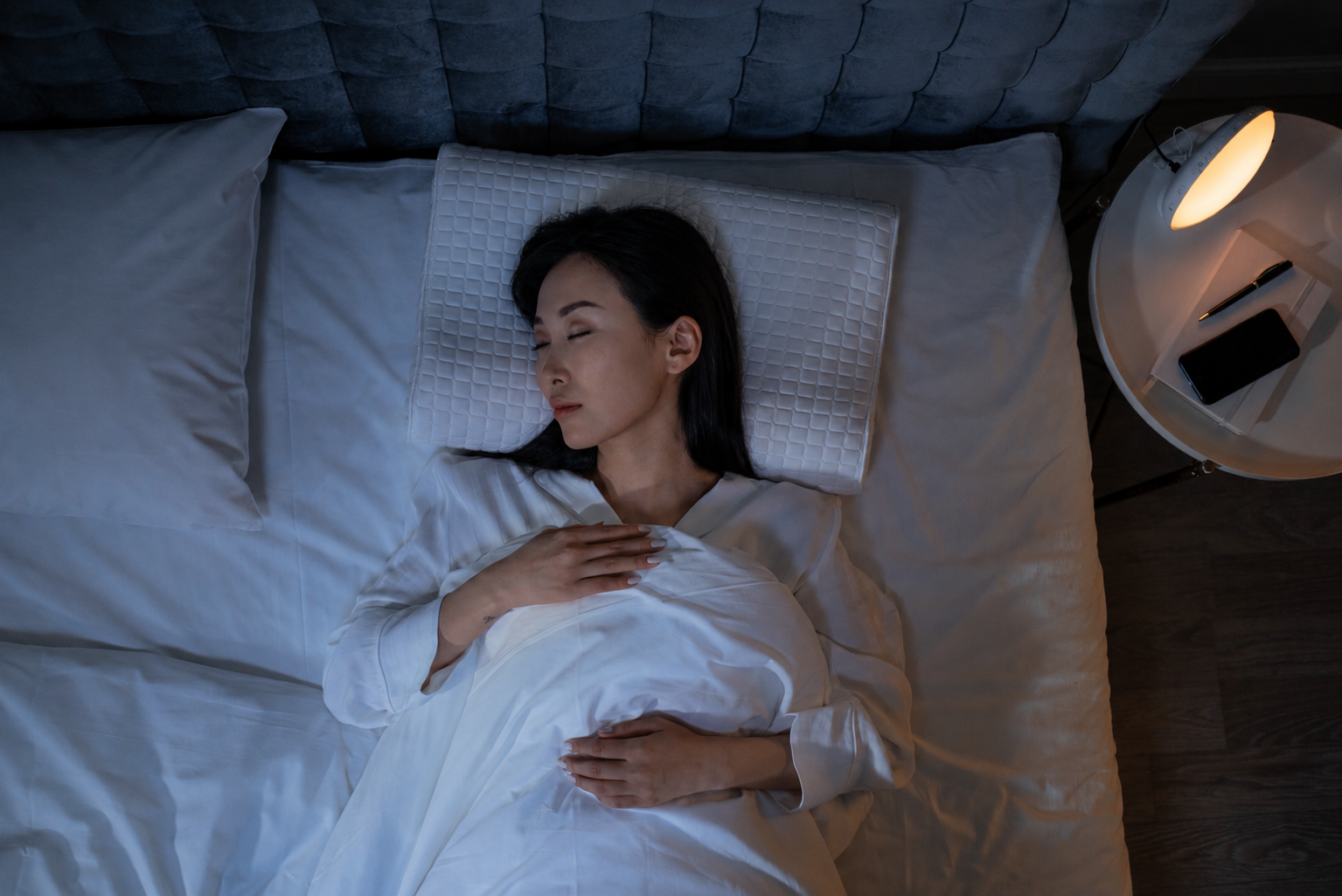
“Beauty sleep” is one of those expressions that feels familiar before anyone stops to define it. It appears in films, magazines and family advice, often somewhere between folklore and common sense.
The phrase can also be misunderstood. Sleep is not a facial treatment, a shortcut to perfect skin or a replacement for skincare. One good night cannot erase every sign of a difficult week, and rest should never be presented as a promise of transformation.
A more useful way to understand beauty sleep is this: sleep is part of the wider routine that supports how people feel, function and care for themselves. It belongs beside skincare, not in place of it.
The expression behind the ritual
The idea of beauty sleep has survived because the night naturally changes the rhythm of a beauty routine. The mirror is no longer the center of attention. Products have been applied, the day is closing and the body is moving into a different biological state.
Sleep itself is not passive. It is a complex and dynamic process that supports many aspects of physical and mental health. For adults ages 18 to 60, public-health guidance generally recommends at least seven hours of sleep a night, while also emphasizing that sleep quality matters alongside duration.
That does not mean everyone needs an identical routine or bedtime. It means that rest deserves to be treated as a real part of self-care rather than whatever happens after everything else is finished.
What research can — and cannot — tell us
Researchers have explored how short or disrupted sleep may relate to skin barrier recovery and visible facial changes. Small human studies have reported associations between poorer sleep quality and reduced skin barrier function, while experimental sleep restriction has been linked with slower barrier recovery in controlled settings.
These findings are interesting, but they should be read carefully. They do not prove that sleep alone prevents aging, treats a skin condition or produces a predictable cosmetic result. Skin appearance is influenced by many factors, including genetics, sun exposure, environment, hydration, stress, hormones, skincare practices and overall health.
The most responsible conclusion is also the least dramatic: sleep appears to be one meaningful part of a much larger picture.
Beauty beyond the final skincare step
Most beauty routines focus on what can be applied: cleanser, serum, moisturizer, sunscreen. Those choices matter, but they are only one part of the evening.
A nighttime ritual can also include the conditions that make rest more likely: lower light, fewer interruptions, a comfortable room and a sense that the day is actually ending. None of these habits needs to look luxurious or perfectly curated to be useful.
The goal is not to perform an ideal routine. It is to reduce friction between being awake and being ready for sleep.
“Sleep belongs beside skincare, not in place of it.”
— DANGEL EDITORIAL
A realistic nighttime ritual
A supportive routine can be simple enough to repeat. The following ideas are based on widely used sleep-hygiene guidance rather than beauty promises.
01
Begin with a consistent wake-up time
Bedtime often receives all the attention, but a regular wake-up time can give the day a stable anchor. Going to bed and waking at roughly similar times helps the body respond to predictable cues. Consistency matters more than creating a schedule that looks impressive on paper.
02
Create a transition instead of an abrupt stop
The hour before sleep does not need to become another productivity project. A small transition may be enough: dimming the lights, putting away work, taking a warm shower, reading a few pages or listening to something calming. The point is not to guarantee sleep, but to make the change of pace easier to recognize.
03
Move stimulation earlier when possible
Bright light, phone use and late caffeine can make it harder for some people to wind down. A practical approach is to move stimulating activities earlier rather than trying to eliminate them perfectly. The phone can charge away from the pillow, bright overhead light can give way to a softer lamp, and caffeine can stay in the earlier part of the day when possible.
04
Make the bedroom easier to sleep in
A quiet, dark and comfortably cool room is a classic recommendation for a reason: the sleep environment should ask as little attention from the body as possible. That may mean blackout curtains, a sleep mask, earplugs, a fan, cleaner bedding or simply removing one source of clutter from the bedside table.
05
Keep skincare comfortable
A nighttime skincare routine does not need to be complicated to feel complete. Gentle cleansing, a product that suits the skin and a comfortable finish may be enough. If a routine causes burning, persistent irritation or worsening symptoms, adding more steps is not necessarily the answer. A qualified healthcare professional can help with concerns that continue or feel difficult to manage.
What beauty sleep does not mean
Beauty sleep should not become another standard people are expected to perform perfectly. It does not mean that a tired face is a failure, that everyone can control their sleep circumstances or that rest is available in equal amounts to every person.
It is also not a substitute for sun protection, appropriate skincare, medical care, nutrition or treatment for a sleep disorder. Persistent trouble falling asleep, frequent waking, loud snoring, gasping during sleep or unusual daytime sleepiness are reasons to speak with a healthcare professional.
The phrase becomes more helpful when it loses the promise of perfection.
A quieter definition of beauty sleep
Perhaps beauty sleep is not a secret treatment at all. Perhaps it is the decision to stop treating rest as empty time.
It is the part of the ritual that cannot be photographed as easily as a serum bottle or a polished vanity. It is the lowered light, the phone placed out of reach, the room becoming quiet and the permission to finish the day.
Beauty sleep is not a guarantee of how anyone will look in the morning. It is a reminder that care does not end when the last product is applied.
READ NEXT
The Beauty Ritual That Begins When the Lights Go Out
Explore the editorial behind the familiar idea of beauty sleep — and the nighttime perspective that inspired this story.
Editorial information: Dangel provides editorial and informational content and does not provide medical advice, diagnosis or treatment.
Sources & Further Reading
Editorial note: Research on sleep and skin is still developing. Some available studies involve small samples or controlled experimental conditions and should not be interpreted as proof that sleep alone produces a specific cosmetic result.
DANGEL
Beauty, self-care and nighttime rituals.
© 2026 Dangel. All rights reserved.
Dangel provides editorial and informational content and does not provide medical advice.